Aortic disease is often defined by anatomy, not symptoms alone. Aneurysms and complex vascular conditions may progress quietly, making accurate imaging and timely specialist evaluation especially important.
For patients requiring intervention, Dr Gaurav Mohan, being one of the most trusted heart specialist in Amritsar, available at Sudarshan Heart Clinic, assesses whether a minimally invasive endovascular approach such as EVAR, TEVAR or another advanced aortic procedure is appropriate for the individual anatomy and clinical risk.
When Endovascular Treatment May Be Considered
Specialist evaluation may be required for:
- Abdominal or thoracic aortic aneurysms
- Enlargement or weakening of the aorta
- Complex aortic disease requiring endovascular repair
- Vascular disease affecting major arteries
- Patients considered for minimally invasive aortic treatment
- Follow-up after previous aortic or vascular intervention
Not every aneurysm requires immediate treatment. The decision depends on factors such as size, location, rate of growth, symptoms, anatomy and overall procedural risk.
Advanced Aortic & Endovascular Procedures
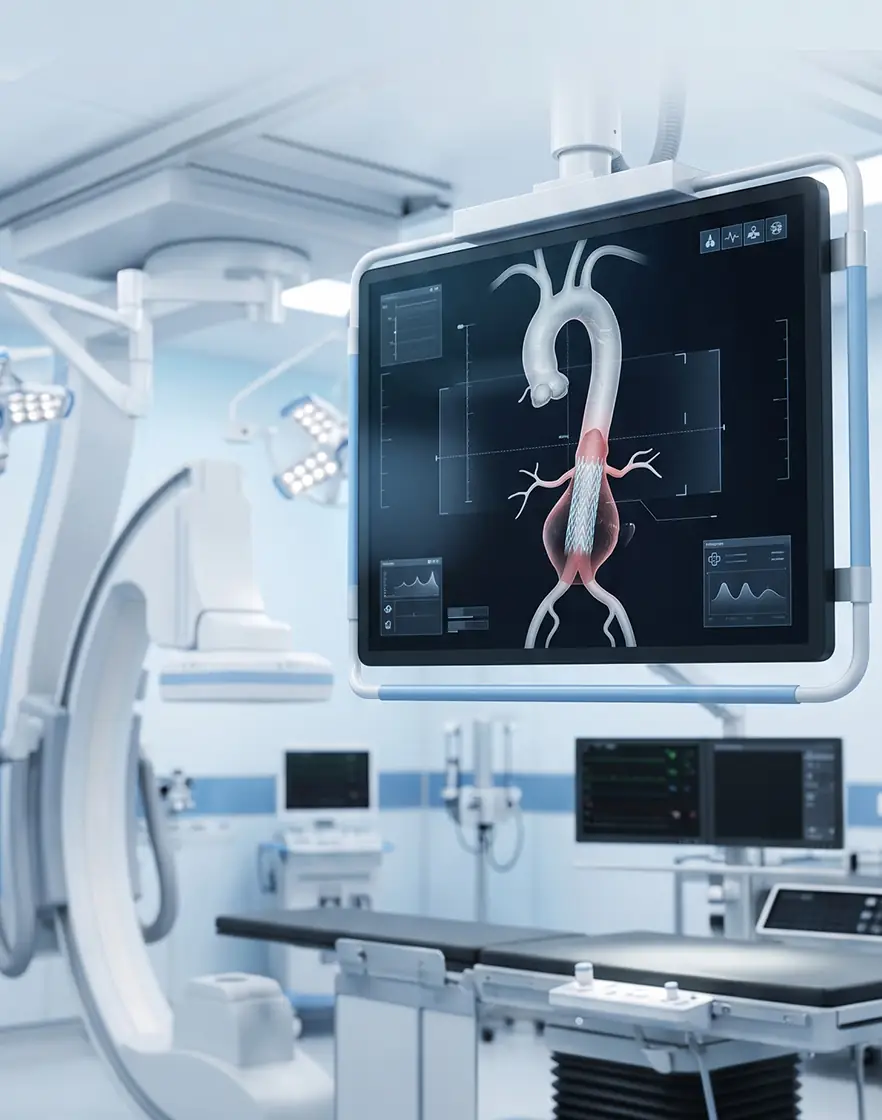
- EVAR: Endovascular Aneurysm Repair (EVAR) is a minimally invasive procedure used to treat selected abdominal aortic aneurysms. A stent graft is positioned within the affected section of the aorta to redirect blood flow and reduce pressure on the weakened vessel wall.
- TEVAR: Thoracic Endovascular Aortic Repair (TEVAR) uses a similar catheter-based approach for selected conditions involving the thoracic aorta.
- Advanced Endovascular Interventions: More complex aortic or vascular anatomy may require specialised planning and customised endovascular strategies depending on the vessels involved and the extent of disease.
Detailed Planning Before Intervention
Endovascular procedures rely heavily on accurate imaging and anatomical assessment. Before treatment, the team may review:
- CT angiography and vascular imaging
- Previous cardiac and vascular reports
- Kidney function and blood investigations
- Current medications
- Previous vascular procedures or surgery
- Associated cardiac and medical conditions
At Sudarshan Heart Clinic, bein the most trusted heart clinic in Amritsar, the focus is on determining whether intervention is required, whether an endovascular approach is appropriate and how the procedure can be planned around the individual anatomy.
Follow-up after treatment is equally important and may include imaging surveillance, medication review and continued management of cardiovascular risk factors.
Frequently Asked Questions
What is an aortic aneurysm?
An aortic aneurysm is an abnormal enlargement or weakening of a section of the aorta, the main artery carrying blood from the heart.
What is the difference between EVAR and TEVAR?
EVAR is generally used for selected aneurysms involving the abdominal aorta, while TEVAR is used for selected conditions involving the thoracic aorta.
Does every aortic aneurysm need treatment?
No. Some aneurysms can be monitored. Treatment depends on their size, growth, symptoms, location and the patient’s overall risk.
How are endovascular procedures performed?
They are catheter-based procedures in which devices such as stent grafts are guided through the blood vessels to the affected area.
Is follow-up required after EVAR or TEVAR?
Yes. Regular clinical review and imaging may be required to monitor the repaired section of the aorta and assess long-term results.