
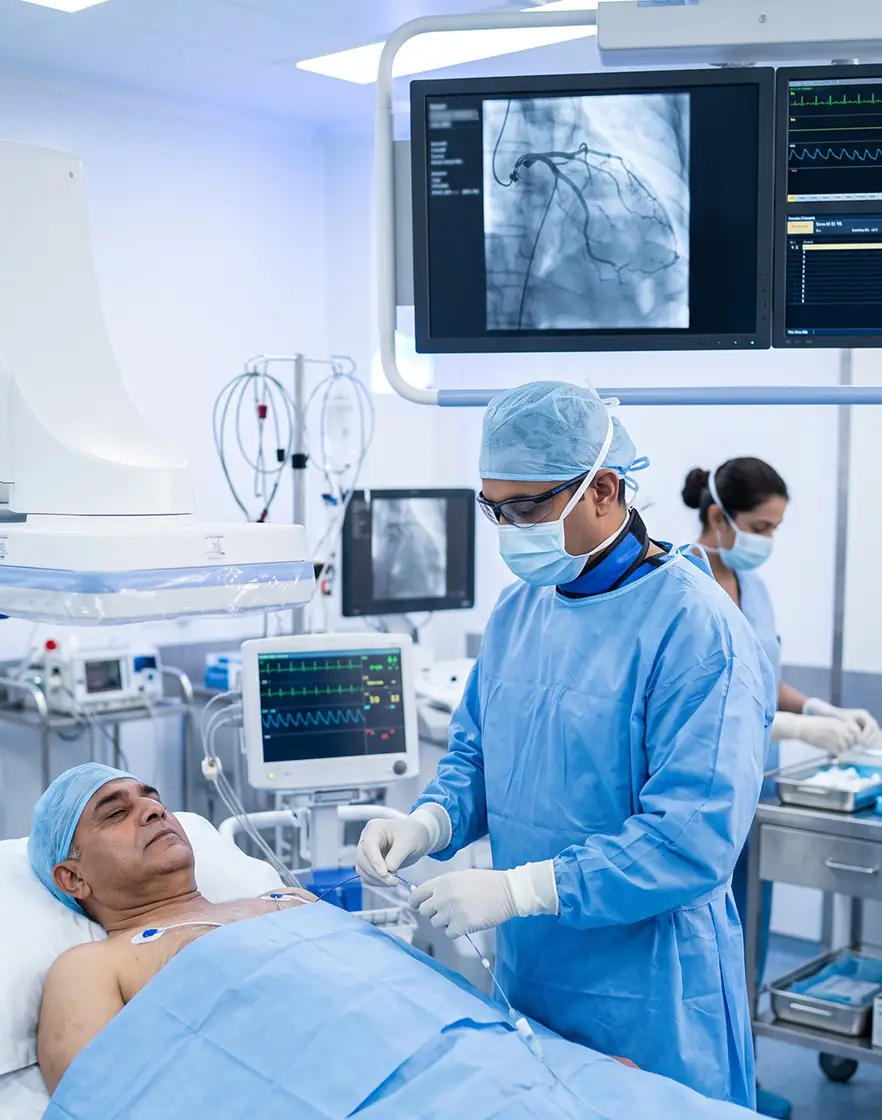
At Sudarshan Heart Clinic, Amritsar, coronary care begins with understanding whether a blockage is present, how significant it is and whether intervention is actually required. Dr Gaurav Mohan, one of the most experienced heart specialist in Amritsar, evaluates the clinical findings and coronary anatomy together before recommending the next step.
When Coronary Angiography May Be Advised
Coronary angiography may be considered when symptoms or investigations suggest reduced blood flow to the heart, including:
- Persistent or recurrent chest pain
- Breathlessness on exertion
- Abnormal ECG, TMT or other cardiac investigations
- Suspected coronary artery disease
- Symptoms despite medical treatment
- Evaluation after an acute coronary event
- Further assessment before certain cardiac procedures
Angiography Shows. Angioplasty Treats.
Coronary angiography uses contrast imaging to show the coronary arteries and identify the location, number and severity of blockages. If a significant blockage is found and angioplasty is appropriate, a small balloon is used to widen the narrowed segment and improve blood flow.
A coronary stent may then be placed to help keep the treated artery open. The choice of treatment depends on the artery involved, extent of disease, anatomy of the blockage and the patient’s overall clinical condition.
Not every blockage requires a stent. Angiography may also show that medication, risk-factor management, further evaluation or a different treatment strategy would be more appropriate.
What the Procedure Involves
Coronary angiography and angioplasty are catheter-based procedures, most commonly performed through an artery in the wrist or groin. Contrast imaging helps guide the catheter through the coronary arteries and allows the treatment strategy to be planned with precision.
Before treatment, the team reviews:
- Previous cardiac reports and investigations
- Kidney function and relevant blood tests
- Current medications
- Allergies and other medical conditions
- Previous angiography, angioplasty or cardiac surgery, if any
Preparing for Your Consultation
Bring along:
- Previous ECG, Echo, TMT or angiography reports
- Current medication list
- Recent blood investigations
- Details of previous angioplasty, stents or bypass surgery
- Hospital discharge summaries, if applicable
At Sudarshan Heart Clinic, the focus is on understanding whether a blockage needs treatment, and if so, which approach is most appropriate.
Frequently Asked Questions
What is the difference between angiography and angioplasty?
Angiography is a diagnostic procedure used to visualise coronary artery blockages. Angioplasty is a treatment used to open a significant narrowing, usually with a balloon and stent.
Does every blockage found on angiography require a stent?
No. Treatment depends on the severity and location of the blockage, symptoms, test findings and the patient’s overall clinical condition.
How is coronary angiography performed?
A thin catheter is passed through an artery, usually from the wrist or groin, and contrast is used to visualise the coronary arteries.
When may angioplasty be recommended?
Angioplasty may be advised when a coronary blockage is significantly restricting blood flow and catheter-based treatment is considered appropriate.
Can I seek a second opinion before angioplasty or stenting?
Yes. Patients who have been advised angioplasty, stenting or another coronary procedure can consult Dr Gaurav Mohan for review of their reports and treatment options.